Graphic Novel Book KDP Interior: KDP Interiors Graphics
When I first opened the Graphic Novel Book KDP Interior files, I immediately felt the confident, panel-driven energy of a proper comic layout. This isn't a generic page template—it's a collection of 120 distinct interior designs that feel like they were pulled straight from a dark, moody graphic novel. The line art is crisp, the panel arrangements are dynamic, and the overall aesthetic lands somewhere between underground indie comic and polished commercial illustration. For a digital seller like me, it’s exactly the kind of graphic design asset that sparks at least a dozen product ideas before I’ve even finished scrolling through the folder.
The mood is bold, slightly gritty, and undeniably graphic. It’s not cute, it’s not rustic—it’s built for a buyer who loves comics, sequential art, storytelling, and that raw, ink-on-paper feel. I can see this appealing to self-published authors, comic artists, game designers, and print-on-demand sellers who want to build a brand around narrative-driven merch. The visual personality is strong enough to carry a whole product line, which is a rare quality in a KDP Interiors asset.
What’s Actually Inside the Download
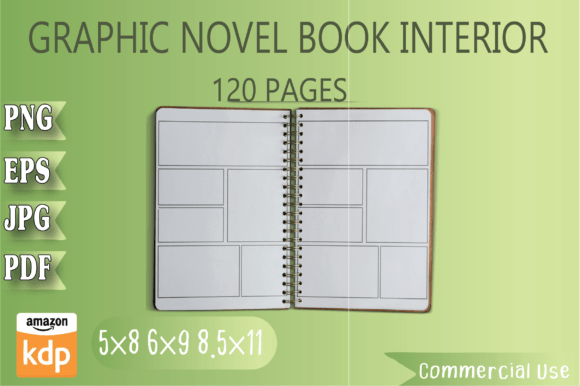
The product description is clear, but I always like to walk through the specifics. The Graphic Novel Book KDP Interior includes 120 pages of unique designs, pre-set in three common trim sizes: 8.5×6 inches, 6×9, and 5×8. All files are delivered at 300 DPI, which is non-negotiable for print quality. The instant download gives you a print-ready PDF, plus JPG, PNG, SVG, and AI formats. Having the SVG and AI files means the designs are fully editable—you can tweak panel borders, adjust gutters, or extract individual elements for other projects. The PNGs come with transparency where needed, and the high-resolution JPGs are ready to drop straight into a Canva template or a product mockup.
This isn’t just a single book interior. It’s a versatile Graphics pack that can be repurposed across dozens of physical and digital products. If you’re used to working with Etsy products or creative marketplace downloads, you’ll appreciate the file organization. I’d still recommend renaming the folders for a cleaner customer delivery, but the raw material is solid.
A Real Shop Scenario: Building a Comic-Themed Collection
Let me set the scene. I’m currently planning a seasonal collection for my Etsy shop and my Creative Fabrica storefront, centered around comic book aesthetics. I need assets that can work as printable wall art, t-shirt designs, journal pages, and social media promo graphics—all with a consistent visual thread. The Graphic Novel Book KDP Interior became the backbone of that collection.
First, I pulled a few of the most visually striking page spreads and placed them into a café mockup as framed prints. The black-and-white line art with halftone shading looked spectacular against a brick wall background. Next, I isolated a speech bubble from one of the SVG files and paired it with a bold sans-serif font to create a quick mug design. Because the core style is so graphic, even a small element can become a recognizable brand mark. Then I layered a double-page panel layout over a soft gradient background in Canva to make a social media template for a fictional podcast launch. Each time, the asset felt intentional and cohesive.
This is the kind of testing I do before listing anything. I want to see how an asset behaves across different surfaces, dimensions, and color treatments. The Graphic Novel Book KDP Interior passed every quick test I threw at it, and the thematic consistency means I can bundle multiple products together without the collection looking disjointed.
Where This Design Truly Shines
Based on my mockup experiments, here’s where the Graphic Novel Book KDP Interior delivers the strongest return:
- KDP book interiors: The obvious use case. The pages are already formatted for major trim sizes, so an author can insert their own text and images directly into the PDF or AI file and publish a graphic novel with minimal layout work.
- Printable art and posters: The high-contrast, panel-based compositions make incredible wall art, especially for a home office, studio, or comic book shop. The 300 DPI resolution ensures crisp prints up to the intended size.
- Merchandise graphics: T-shirt prints, tote bags, and tumbler wraps benefit from the bold, graphic linework. I’d use the PNG files with transparent backgrounds for sublimation, and the SVG for screen-print setups.
- Digital download bundles: Pair these pages with a few comic-style font families and a set of halftone texture overlays to create a high-value graphic design bundle that sells for a premium.
- Social media and blog visuals: The panel layouts serve as natural visual hierarchy tools. You can drop a headline into one panel, supporting text into another, and an image into a third—it’s built-in storytelling.
- Canva templates: Import the PNG or JPG files into Canva as background elements, and you’ve got an instant template for comic-style newsletters, invitations, or promotional graphics.
Watch Out for These Common Seller Pitfalls
Even a strong graphic design asset has limitations. Here’s where I’d be cautious with the Graphic Novel Book KDP Interior:
- Sticker-sized designs: The intricate panel details and thin line work can become muddy when shrunk down to a 2-inch sticker. If you’re creating Cricut sticker sheets, enlarge a single panel or speech bubble rather than using the full page.
- Dark background compatibility: Many of the files rely on black ink on a white or transparent background. On a dark product—like a black t-shirt—the contrast flips awkwardly unless you invert the artwork or add a contrasting outline. Always test on a dark mockup.
- Overly complex thumbnails: A full comic page can look like visual noise when cropped into an Etsy product thumbnail. I’d extract one dramatic panel or a bold graphic element for the listing image, then show the full spread in the second slide.
- Text-heavy templates: If you’re overlaying a lot of text, the busy panel backgrounds can reduce readability. Stick to short, punchy headlines, and use a bold sans-serif or a clean handwritten font to maintain legibility.
- Cutting lines for Cricut and Silhouette: The SVG files are editable, but the original designs weren’t built with cutting paths in mind. If you intend to sell a cut-ready design, you’ll need to simplify the artwork and create clean, continuous outlines manually.
Seller’s Technical Checklist: Before You Publish
I never list a product without a systematic check. Here’s the exact pre-flight routine I’d run on the Graphic Novel Book KDP Interior:
- Mockup test: Place the design on at least three different product mockups—a framed print, a t-shirt, and a mug. Check for scaling issues and edge bleed.
- Thumbnail preview: Shrink the listing image to thumbnail size (around 200×200 pixels) and see if the main subject is still readable. If not, crop or simplify.
- White and dark background check: Preview the PNG with transparency on both a white and a dark background. Ensure the line art doesn’t vanish or create harsh ghosting.
- Print test: Print a sample page at 100% scale on a home printer, even if just in black and white. Look for any unintended blurring or thin lines that break up.
- SVG cut quality: Open the SVG in a vector editor and test a simple cut path. If nodes are excessive or lines are grouped strangely, I’ll clean them up before selling a Cricut-friendly version.
- Resolution confirmation: Verify that all raster files are indeed 300 DPI at the stated dimensions. A 72 DPI file won’t cut it for print-on-demand.
- File organization: Rename folders clearly: “PDF_Pages”, “PNG_Transparent”, “SVG_Vectors”, “JPG_HighRes”. This small step increases perceived value and reduces customer confusion.
- Font pairing test: Overlay a few font styles on the artwork—a serif for classic novels, a bold sans-serif for modern merch, a brush script for signing events, and a grungy handwritten font for comic effect. The Graphic Novel Book KDP Interior works best with display fonts that match its weight and attitude.
- Commercial license check: Confirm that the asset’s license allows you to sell finished products, not just personal use. Most KDP Interiors assets come with commercial rights, but I always double-check the terms.
How This Graphic Novel Asset Elevates Product Presentation
Beyond the products themselves, the Graphic Novel Book KDP Interior can transform how you present your brand. A cohesive visual style across your listing images, social media graphics, and packaging design builds instant customer trust. When someone visits your Etsy shop and sees a consistent comic-inspired aesthetic, they’re more likely to click through multiple listings and perceive your products as a curated collection rather than a random assortment of digital downloads.
I often use the panel layout as a background for product mockup previews. One panel holds the product image, another holds the title, and a third contains a short testimonial or feature bullet. It’s a clean, graphic way to structure visual information. For a small business owner or handmade business, this kind of ready-made visual storytelling is a shortcut to a more professional brand identity.
Pairing With Other Design Assets for Maximum Impact
To get the most out of the Graphic Novel Book KDP Interior, I’d combine it with a few other strategic design assets. A set of halftone texture PNGs can add depth to the backgrounds. A collection of comic-style speech bubbles and action lines as SVG files can extend the utility. And a well-chosen color palette—perhaps a muted duotone like faded teal and rust—can update the classic black-and-white into a trendy, modern look without losing the core appeal.
If you’re a Canva template seller, you could create a set of comic-themed Instagram story templates, Pinterest pins, and newsletter headers. The consistent panel structure becomes your signature. For print-on-demand sellers, the same few page layouts can be adapted into a themed collection of t-shirts, tote bags, and notebooks, all tied together by the graphic novel mood.
Final Thoughts From a Product-Creation Angle
The Graphic Novel Book KDP Interior is not a passive, fill-in-the-blank template. It’s a creative launchpad. The 120 pages give you a huge range of starting points, and the included SVG and AI files mean you can decompose the artwork into standalone elements—a single panel, a dynamic sound effect burst, a character silhouette—for entirely different product lines. The fact that it’s delivered in three common sizes and at 300 DPI removes the technical friction that usually slows down a fast-moving seller.
For anyone building a shop around comic culture, indie publishing, or narrative-driven merchandise, this is a straight-to-the-point digital product that deserves a place in your design toolkit. It’s not trying to be everything to everyone, and that’s exactly why it works. Test it thoroughly, respect its edges, and you’ll find yourself reaching for this asset again and again when you need a punch of graphic, storytelling energy in your products.