Cattle Log Book KDP Interior: Graphics & KDP Interiors
A Rustic Asset That Tells a Visual Story
The first time I opened the Cattle Log Book KDP Interior, I noticed how instantly it communicates a sense of purposeful organization wrapped in a down-to-earth, agricultural aesthetic. This isn't a flashy, over-designed template. It is a graphic design asset that feels grounded, practical, and completely at home in the hands of a livestock manager, a homesteading blogger, or a farm business owner. The editorial mood it creates is one of calm, clean record-keeping, with a hint of rustic charm that makes the data feel personal rather than sterile.
For a digital publisher or blog designer, that mood is valuable. It means the visual will align naturally with content about ranching, regenerative agriculture, small farm bookkeeping, 4-H projects, or even vintage farmhouse lifestyle pieces. The design doesn't scream for attention, but it quietly reinforces trust. When a reader lands on a blog post and sees a well-structured, theme-appropriate log sheet as a downloadable resource, the site immediately feels more authoritative and deeply connected to its niche.
When a KDP Interior Becomes a Versatile Blog Graphics Tool
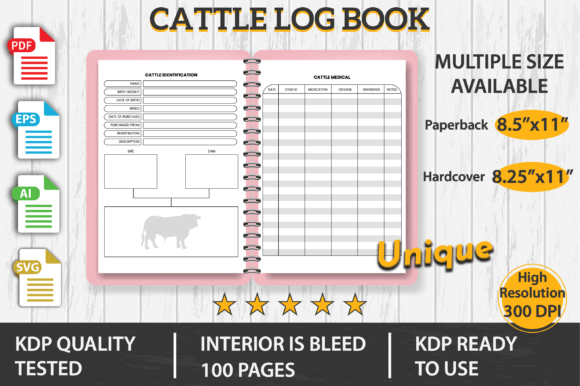
Many people think of KDP Interiors only as the guts of a self-published book. But viewed through the lens of content marketing, this Cattle Log Book KDP Interior is a multi-purpose digital product waiting to be repurposed. The interior features a 100-page structure with a clean layout, dimensions of 8.5 x 11 inches (also available in 8.25 x 11 inches), and full bleed, which gives it a polished, print-ready feel. That same polish translates beautifully to on-screen graphics.
As a blogger or affiliate marketer, you can use a single page from this interior as a Pinterest pin previewing a free cattle management printable. You can stack a few pages into a mockup for a website header promoting your farm resources library. You can even slice a section of the log into a blog graphic that illustrates a post about efficient herd tracking. The visual hierarchy is already built in: clear headers, spacious tables, and subtle line work draw the eye naturally, making the image easy to scan even at a smaller size.
How This Printable Design Supports Real Publishing Workflows
When I plan editorial design for a content site, I always ask: does this asset make my content look more clickable? With the Cattle Log Book KDP Interior, the answer is often yes. The pages are distinctly professional but not overly corporate, which means they fit a wide range of small business branding contexts. A farm-to-table food blogger, for instance, could use a portion of the log as a lead magnet for an email series on starting a homestead. An online educator teaching livestock management could turn the interior into a digital guide for students, layering it with additional notes inside a Canva template.
One of the strongest uses I’ve found is as a content upgrade for high-traffic articles. Imagine a blog post titled “How to Keep Accurate Calving Records.” Inside that post, a well-designed thumbnail of the log book page, linked to a downloadable PDF, can dramatically increase conversion rates. Because the design asset already carries a neutral, utilitarian beauty, it doesn’t distract from the article’s message. Instead, it reinforces the idea that the blogger delivers genuine, field-tested resources.
Where the Cattle Log Book Design Shines as a Digital Product
The Cattle Log Book KDP Interior works exceptionally well in several specific placement areas. As a hero image on a resource page, it immediately signals that the page contains practical, printable tools. As an editorial accent within a newsletter, a cropped version of the log adds a tactile, paper-like texture that feels personal and unhurried. On social media graphics, especially on image-heavy platforms like Instagram or Pinterest, the interior’s structured layout contrasts nicely with looser, more casual photography, creating a balanced visual identity.
For affiliate marketing content, this asset is particularly clever. A publisher reviewing KDP tools or creative marketplace products can use actual page excerpts as demonstration images, showing exactly how the interior looks in a real-world context. That builds credibility and gives potential buyers an honest preview. Similarly, a small business selling custom log books can use the interior as a base for printable design mockups, adapting it with their own branding while keeping the underlying structure intact.
Building a Consistent Brand Identity with a Farm-Ready Graphic
Visual consistency is what separates a memorable blog from a forgettable one. If your brand already uses earthy tones, serif fonts, and a warm, approachable voice, the Cattle Log Book KDP Interior will slide into your design assets library without a hitch. The interior’s layout suggests a modern design sensibility that respects tradition without being old-fashioned. It’s clean enough to work alongside minimalist branding, yet detailed enough to feel substantial.
I’ve tested the interior as a category thumbnail for a farm blog’s “record-keeping” section, and it immediately gave the page a tidy, organized air. When placed next to a serif font header, the title lines of the log harmonize beautifully. Pair it with a handwritten font accent, and the page takes on a charming, personal note. Even alongside a sans serif font, the structured tables maintain a crisp, modern feel that doesn’t clash. The asset is versatile enough to support a visual identity that is both professional and down-to-earth.
Smart Use Cases for Publishers, Marketers, and Educators
Let’s make this concrete. Here are some of the most effective ways I’ve seen—and personally used—this digital download in real publishing projects:
- Blog featured images for articles about cattle health, breeding schedules, or farm budgeting, where a snippet of the log adds instant context.
- Pinterest pins designed as “cheat sheet” previews, with a bold title overlay and a peek at the interior’s table structure.
- Newsletter headers for a weekly farm update, cropped to a slim banner that hints at new downloadable resources inside.
- Lead magnet landing pages, where a full-page mockup of the log book sits beside an email signup form, making the offer feel tangible.
- Digital guide covers for an online course on livestock management, using the interior as a back cover or chapter divider.
- Media kit elements for a ranch business, showing that the brand offers professional, printed-quality materials.
- Social media carousel slides, with each card revealing a different page of the log to demonstrate completeness.
In each case, the graphic design asset doesn’t just decorate the page. It clarifies the content’s purpose and makes the reader more likely to engage, click, or download.
Visual Pitfalls to Avoid with This Graphic Design Asset
Even the most beautiful design assets have limitations. Because the Cattle Log Book KDP Interior contains detailed text and table lines, it can become muddy when scaled down to very small mobile thumbnails. If you’re using it as a featured image on a blog that displays tiny thumbnails in a grid, test the legibility first. The table borders may merge into a gray blur, and any handwritten-style details could vanish.
I also recommend caution when layering this interior over busy backgrounds. The log’s strength lies in its clean, structured appearance. Placing it on top of a highly textured photo or a pattern-heavy design can create visual noise that undermines the visual hierarchy. Similarly, in corporate content or a website that needs a very minimal visual system, the rustic character of the log might feel out of place. A financial advisory site, for example, would likely find the agricultural theme jarring unless it’s specifically targeting the agribusiness sector.
Always check the interior’s appearance on a low-contrast background. The original design likely assumes a white or cream page, so if you place it on a dark or mid-tone website section, the soft lines may lose definition. A quick contrast check can save you from publishing a graphic that looks washed out.
Practical Publisher Notes for Real-World Deployment
Before you use the Cattle Log Book KDP Interior in any monetized context, there are a few technical and legal steps I always follow. First, confirm the commercial license terms. Many creative marketplace products allow use in digital products, but some restrict resale of the interior as-is in a competing KDP book. If you plan to use it as a lead magnet or a digital guide sold on your site, double-check that you have the appropriate commercial design clearance.
File size matters for web performance. A full 100-page PDF can be heavy, but you’ll likely extract single pages or small groupings for blog graphics. Compress those images properly—aim for a balance between crispness and load speed. I often test a page as a featured image at 1200 pixels wide, compress it to around 150 KB, and preview it on both desktop and mobile. The subtle bleed edges should still look intentional, not chopped off.
Another tip: place the interior inside a real blog layout before publishing. Use a staging environment or a simple mockup tool to see how the graphic interacts with your headline, sidebar, and navigation. I’ve found that the log works best when surrounded by a generous amount of white space, allowing its structured details to breathe. If your theme uses a dense, text-heavy layout, give the graphic extra margin or consider using it as a hero image that spans the full container width.
Finally, test the design with multiple font styles. The interior’s own typefaces may be embedded, but when you overlay titles on a Pinterest pin, try a serif font for a classic farmhouse feel, a script font for a personal touch, or a display font for a bold, modern look. I’ve seen excellent results pairing the log with a simple handwritten font overlay that mimics a farmer’s notes, reinforcing the authentic, hands-on story the graphic tells.
Why the Professional Design Matters for Reader Trust
A graphic design asset is never just decoration. It’s a signal. When a reader sees the Cattle Log Book KDP Interior on a blog, they immediately understand that the publisher has invested in quality resources. The interior’s dimensions—8.5 x 11 inches with bleed—are a print-industry standard, which means the layout respects real-world production constraints. That professionalism transfers to the digital space. Readers are more likely to trust a downloadable resource that looks like it could be printed and bound neatly, rather than a hastily assembled table thrown together in a word processor.
The unique, professional design of this interior also helps with brand identity recall. When you use the same log style across multiple blog graphics, newsletter headers, and social media posts, you create a visual thread that ties your content together. Over time, followers will recognize that structured, clean farm aesthetic as uniquely yours, which strengthens your small business branding and makes your content marketing more cohesive.
From KDP Interior to Multi-Platform Content Engine
What I appreciate most about the Cattle Log Book KDP Interior is how it moves fluidly between the roles of printable design, digital product, and editorial design element. A single digital download can become a website header on Monday, a social media graphic on Wednesday, and a lead magnet on Friday. This flexibility is invaluable for a blog designer or digital publisher who needs to maintain a steady stream of fresh visuals without endlessly commissioning new work.
For affiliate marketers in the farming or self-publishing niches, the interior is a brilliant demonstration tool. A blog post reviewing KDP Interiors can show the exact layout, bleeds, and page count, all while giving readers a sense of how the product looks in use. That kind of transparency builds trust and can lead to higher conversion rates. Even creative entrepreneurs selling their own Canva templates can use this interior as a base to create customized log books, adding their own color schemes, icons, and branding, then selling the result as a business design asset.
Final Thoughts from a Publisher’s Perspective
Every time I add a graphic design asset to my content toolkit, I ask whether it can make the reader’s experience clearer, more enjoyable, and more memorable. The Cattle Log Book KDP Interior does all three. It’s not flashy, but it’s steady. It’s not trendy, but it’s timeless in its niche. And it’s not just a book interior—it’s a visual building block that can elevate web design, blog graphics, social media graphics, and digital products for anyone who publishes content rooted in agriculture, homesteading, or rural life.
If you’ve been looking for a creative design piece that adds structure and warmth to your editorial projects, this one is worth a very close look. Just remember to test it across all your publishing surfaces, respect the commercial license, and let its clean, professional lines do the quiet work of building reader trust.