Skull Weed Trippy World 20oz Tumbler 8
First glance at a design that refuses to be quiet
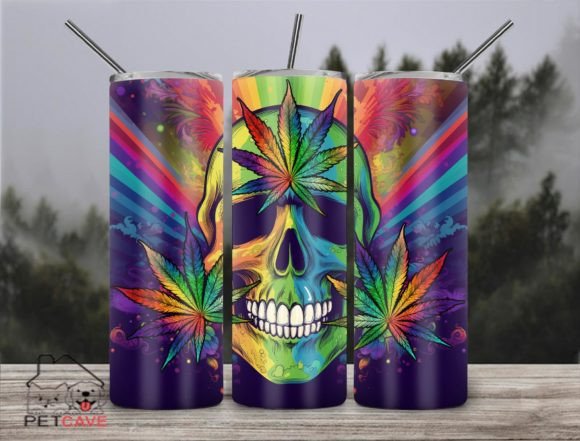
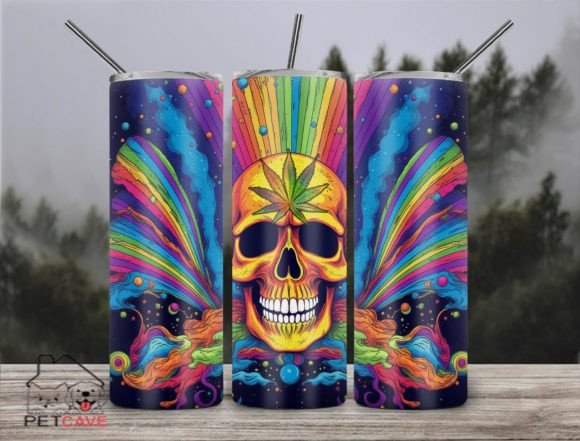
Right away, Skull Weed Trippy World 20oz Tumbler 8 hits you with a bold, unapologetic mood. It’s not a subtle accent piece. The visual language leans into psychedelic counterculture, blending a detailed skull with botanical elements that feel hazy and otherworldly. As a designer who regularly tests artwork for embroidery projects, I immediately start picturing how this would read on a finished garment. The composition has a strong central focal point, but enough surrounding detail to keep the eye moving. That’s good for embroidery because it means the design won’t feel flat after digitizing. The straight and tapered PNG options included in the download tell me this was built with realistic tumbler application in mind, but my brain goes straight to apparel and home decor possibilities. The contrast between the skull’s hard edges and the softer, organic swirls of the surrounding imagery creates a texture that a skilled digitizer can translate into a mix of fill stitch and satin stitch work. The size—roughly 9.3 by 8.2 inches—lands in a sweet spot for a statement piece on a sweatshirt back, a large tote bag panel, or a pillow cover.
Where this design finds its real home in embroidery
After studying the high-resolution PNG file at 300 DPI, I started mentally placing Skull Weed Trippy World 20oz Tumbler 8 into real-world projects. The theme is naturally suited for a custom apparel line aimed at a clientele that loves edgy, festival-inspired, or streetwear aesthetics. Think hoodies, oversized t-shirts, and canvas tote bags. The design’s shape works surprisingly well for a horizontal back panel on a denim jacket or a generously sized embroidered patch. Because the artwork has a wraparound feel to it, a tapered version also gave me ideas for curved surfaces like caps, but I’d carefully test stitch placement on a structured cap front—the side panels might be a better fit than direct center, given the width. For small craft businesses, this design could anchor a product line that includes handmade tote bags, wall art hoops, or even a statement piece on a heavy cotton apron. The mood is undeniably trippy, so it’s not for every customer, but for those who gravitate toward alternative, bohemian, or music festival culture, it’s a conversation starter. I could see it working beautifully on a dark background, where the light areas of the skull and the swirling accents would pop with high-contrast thread colors.
The practical truth about stitching a design this detailed
Here’s where experience matters. Skull Weed Trippy World 20oz Tumbler 8 is not a plug-and-play embroidery file. What you receive is a clean, high-resolution PNG graphic. That means you or a digitizer you trust will need to convert it into a stitch file. The level of detail in the skull’s eye sockets, the small leaves, and the fine wispy lines around the edges will challenge a standard auto-digitizing tool. I’d take this into manual digitizing software and carefully assign stitch types. The skull would benefit from a mix of satin stitch for the bold outlines and fill stitch for the dimensional shading. The surrounding botanical elements, with their dreamlike curves, are perfect for a light fill stitch or even a running stitch approach if you want a more delicate, sketch-like result. But be mindful of stitch density. Too many small details packed tightly together can cause puckering on lightweight fabrics, even with perfect stabilizer. I always test a design like this on a scrap of the exact fabric I plan to use, especially if it’s a stretchy sweatshirt fleece or a loosely woven linen. The visual impact is strong, but the physical embroidery outcome depends entirely on how you interpret the artwork into stitches.
The fabric and product pairing that makes the design shine
I’ve learned through plenty of trial and error that a design with this much personality needs the right canvas. For Skull Weed Trippy World 20oz Tumbler 8, I’d steer clear of ultra-thin or overly textured fabrics at first. A smooth, medium-weight cotton canvas or a sturdy cotton-poly blend gives the stitch definition room to breathe. I’m already picturing a line of boutique tote bags with a solid black or deep charcoal base, using a slightly muted thread palette that still contrasts well. Neon thread colors might sound tempting given the trippy theme, but in practice, overly bright thread on a dark fabric can sometimes read as garish. I’d test a few earthy, vintage-inspired tones—think a bone-white for the skull, olive green for the botanical elements, and maybe a muted rust or dusty purple for shadow accents. This approach keeps the design wearable and elevates the handmade product beyond a novelty item. For small shop owners selling on Etsy or at craft fairs, this design could become a signature piece if executed thoughtfully. A well-digitized version on a high-quality tote bag or a cozy unisex sweatshirt becomes a product that customers reach for repeatedly, and that builds brand trust.
How the design affects customer perception and saleability
From a commercial embroidery standpoint, Skull Weed Trippy World 20oz Tumbler 8 carries a distinct market advantage. It’s not generic. When a customer scrolls through dozens of listings, a design that feels authentic and slightly rebellious often stops the scroll. The trippy, hand-drawn quality of the graphic suggests a boutique product, not a mass-produced item. That matters for handmade shop owners because it lets you price for perceived value. However, I’d be cautious about the product photography. The finished embroidery needs to be captured in clear, natural light so the stitch texture is visible. A printed mockup of the PNG file won’t do the same job as a real stitched sample. I always recommend producing at least one physical sample before listing. The design’s intricate nature means that a poorly digitized version will look muddy, and a customer who receives a messy stitch-out won’t come back. So the investment in a skilled digitizer is non-negotiable. Once the embroidery is clean and crisp, the design has strong giftability, especially for birthdays, music festival season, or as a personalized gift for someone with a free-spirited style.
Working through the tricky spots every designer should check
Let’s talk about the pain points that could trip up even an experienced embroiderer. The tapered PNG file in the download is a thoughtful inclusion, but it doesn’t automatically mean the design will stitch perfectly on a curved surface. I’d test the placement on a cap or a cylindrical item like a cosmetic bag with care. The skull’s symmetry might shift slightly when wrapped, so a mockup on the actual product is essential. For small hoop sizes, this design might need to be split or reduced, but reducing too much could lose the delicate details in the leaves and the skull’s nasal cavity. I’d recommend a minimum hoop size of 5x7 inches for a simplified version, and a larger hoop for the full impact. Textured fabrics like terry cloth or heavy knits will swallow the finer lines, so I’d favor a smooth, tightly woven base. And if the finished product will be washed frequently, I’d double-check thread tension and use a soft cut-away stabilizer to prevent shifting. The design’s trippy world vibe is a selling point, but it’s also a technical challenge—those organic, flowing lines need to be digitized with a steady hand to avoid jagged edges.
Maker notes from the embroidery workbench
Before you commit to a full production run with Skull Weed Trippy World 20oz Tumbler 8, here’s the checklist I run through every time I work with a detailed graphic like this. First, print the design at actual size on paper and hold it against the fabric you plan to use. Look at it from a distance. Does the composition feel balanced? Next, test a black and white version of the artwork to see if the contrast holds without color cues. That helps when you’re choosing thread colors. I always stitch a quick sample on scrap fabric with the same stabilizer combination I’ll use for the final product. Check the back of the embroidery for excessive thread nests or tension issues. If you’re selling the finished product, confirm that the license for the digital file allows commercial use on physical items. This listing is for a graphics file, not a stitch file, so you’re responsible for the digitizing and any licensing for the artwork itself. Most crafters will want to know they can legally sell the finished embroidered item. While the product description doesn’t spell out license terms, contacting the seller for clarity is a smart move before you invest time in digitizing. I’d also save the digitized file in multiple formats for your machine, and keep a detailed record of thread colors used, so you can replicate the look consistently across orders.
Why this design earns a spot in a commercial embroidery lineup
After all the testing and imagining, I keep coming back to the same thought: Skull Weed Trippy World 20oz Tumbler 8 has a cohesive, recognizable personality that is rare in a lot of stock graphics. It’s not just a skull slapped next to some leaves. The way the elements meld together creates a dreamy, almost hypnotic quality that will translate beautifully into a tactile medium like embroidery. For a small business selling handmade products, this design can become a cornerstone item that defines a collection. It’s bold enough to attract attention but detailed enough to reward a closer look. The practical considerations—digitizing skill, fabric choice, hoop size—are real, but they’re manageable for anyone with intermediate embroidery experience. I’d recommend it for a craft business looking to branch into the alternative fashion or festival accessory market, or for a personalized gift that carries a lot of visual impact. Just remember that the success of the finished product sits squarely on the quality of your digitizing and your stitch-out. The graphics file gives you a beautiful starting point, and it’s up to you to turn that into a stitched piece that feels as trippy and immersive as the artwork promises.