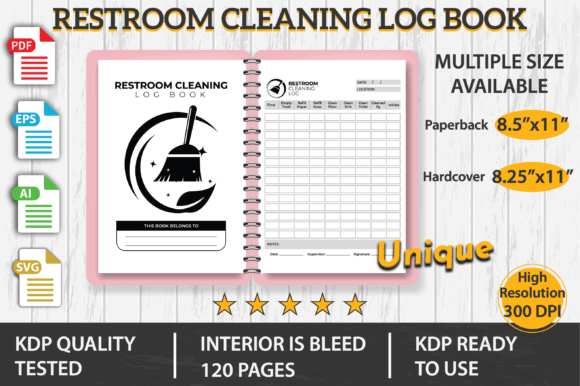
Restroom Cleaning Log Book KDP: Graphics & KDP Interiors
First Glance at a Professional Interior Asset
When I unzipped the Restroom Cleaning Log Book KDP file, the first thing that struck me was the no-nonsense, utilitarian feel. This isn’t a cutesy planner or a decorative journal—it’s a structured, clean template designed for real-world facility management. The layout is crisp, with clearly defined columns and headers, and the overall mood is organized, pragmatic, and professional. For a digital product creator like me, assets with this much practical clarity often translate into surprisingly versatile commercial products. The niche appeal is obvious: janitorial businesses, office managers, restaurant owners, school administrators, and even Airbnb hosts who need to document cleaning routines. But the real question is how well this graphic design asset holds up when you start stretching it across printable downloads, Canva templates, and print-on-demand merchandise.
Why an Interior Template Can Anchor a Full Product Line
I first saw the potential for this KDP Interiors file while planning a back-to-basics collection for my Etsy shop. My goal was to create a series of practical, low-competition printable products that solved a specific pain point. The log book, with its 120 pages and full-bleed 8.5 x 11-inch format, immediately felt like a ready-to-publish book interior. But the smarter play, in my experience, isn’t just selling the book as a KDP paperback. It’s treating the Graphics as a flexible foundation for multiple formats: a downloadable PDF for office managers, a set of daily, weekly, and monthly cleaning checklists, a Canva template for custom-branded logs, or even a full commercial license bundle for cleaning companies.
Testing Across Product Types: From Mockups to Merch
Before committing to a listing, I ran the Restroom Cleaning Log Book KDP through a series of real-world scenarios. I pulled the clean table headers and signature lines into a single-page printable design for a professional cleaning checklist. The simple, sans-serif style of the original layout made it easy to adapt without losing readability. I then layered that checklist onto a product mockup—a clipboard resting on a janitorial cart—and the thumbnail immediately looked like a legitimate, high-value office product. The contrast was strong, the information hierarchy clear, and the visual story told a buyer exactly what they were getting. For print-on-demand, I tested the log template on a spiral-bound notebook cover using a transparent PNG overlay. The result was a practical, commercial-looking product that would appeal to facility managers who prefer physical logs over digital tools.
Where This Asset Shines Brightest
I see the strongest performance for this KDP interior file in products that benefit from structure and clarity. Large-format print products like full-size 8.5 x 11-inch binders, clipboard sets, and laminated wall charts are a natural fit. It also works beautifully as a digital download for commercial cleaning businesses—a PDF logbook with a license to print and use internally. The straightforward grid layout holds up well in product mockups, especially when you showcase the interior pages on a well-lit desk or pinup board. I’ve also bundled it with a few related assets—like a restroom inspection checklist and a supply inventory sheet—to create a themed bundle that boosts perceived value and encourages larger cart sizes. The neutral, genderless design avoids alienating any buyer segment, which is a genuine advantage when you’re selling to a broad audience of small business owners.
When to Use a Light Touch
Not every product category will love this asset. Because the log relies on fine lines and small text boxes, I’d be cautious with tiny sticker designs or anything that gets reduced below two inches. The intricate date grids and signature blocks can blur into a messy blob on a Cricut-cut decal or a miniature planner sticker. Dark backgrounds also pose a problem—the original design uses thin black text, so placing it on a charcoal or navy substrate will kill contrast. I’d also avoid this as a t-shirt graphic unless you’re going for a deliberately ironic, “officecore” aesthetic; the utilitarian vibe doesn’t translate well to casual apparel. For SVG designs intended for cutting machines, you’ll need to significantly simplify the table structure, as the original file is too dense for clean weeding. In those cases, extract a single signature line or a bold header, but leave the full 120-page layout for print-focused products.
Making the Most of the 8.5 x 11 Bleed Advantage
The product description notes a full-bleed setup, and that’s a major selling point when you’re preparing files for KDP or any print-on-demand service. Full bleed means your background color or pattern extends to the edge of the page, eliminating awkward white borders. I tested the Restroom Cleaning Log Book KDP with a subtle light gray background that bled completely, and the result looked far more polished than a standard white page. For sellers offering printable wall art or laminated posters, the bleed ensures that a framed display won’t reveal unprinted margins. The 120-page count also gives you flexibility—you can trim the file down to a 30-page quick-start log or leave it as a full-year asset. I’ve already created a “quarterly cleaning log” version by extracting 30 pages and adding a seasonal cover, which lets me market the same core design at different price points.
Seller-Focused Testing: What I Check Before Publishing
I never upload a new graphic design asset to my shop without running a practical quality checklist. For the Restroom Cleaning Log Book KDP, here’s exactly what I did:
- Mockup Preview: I placed the cover and interior pages on a white desk flat lay, a spiral-bound notebook, and a dark clipboard. The white desk and clipboard scenes worked perfectly; the dark background required me to add a semi-transparent white overlay to maintain readability.
- Thumbnail Test: I reduced the listing image to Etsy’s 570-pixel thumbnail size. The log title and main grid remained legible, which is critical for click-through rates. I added a subtle “120 Pages | 8.5 x 11” badge to the corner to instantly communicate value.
- Print Test: I printed a few pages at home on standard copy paper and at a local print shop on 100gsm matte stock. The fine lines held up even at laser printer resolution, and the bleed ensured no trimming errors. If you’re selling this as a printable design, always include a test print note in your instructions.
- File Organization: I broke the original download into clearly labeled folders: PDF ready-to-print, PNG covers, editable Canva template link, and commercial license text. Buyers appreciate not having to dig through a messy ZIP file.
- Font Pairing: The template uses a clean sans-serif, but I experimented with a serif font for the main title and a soft script for the “Restroom Cleaning Log” header. The serif version added a touch of authority, perfect for a premium commercial binder. The script felt too informal and clashed with the log’s purpose. Stick to sans-serif fonts or sturdy slab serifs for a cohesive look.
Creative Spins for a So-Called “Boring” Niche
One of the biggest mistakes I see new sellers make is dismissing a practical KDP interior as too dull for a creative marketplace. The truth is, boring niches often have less competition and higher conversion rates. I’ve spun the Restroom Cleaning Log Book KDP into a “Facility Manager’s Toolkit” bundle that includes the logbook, a supply inventory tracker, and a set of cleaning crew schedule cards. The whole bundle comes with a commercial license so small businesses can print and use it internally. Another angle: I created a minimalist Canva template where office managers can brand the log with their own logo and color scheme. This positions the asset as a brand identity tool for janitorial services, not just a static product. The ability to offer a Canva template alongside the printable PDF significantly widens your buyer pool.
Licensing Reality Check for Commercial Products
Before you build a whole shop around this design asset, confirm the commercial terms. The description hints at “Unique, professional” design, but you need to check whether the file allows for resale of modified products, print-on-demand use, or inclusion in digital bundles. When I reviewed the Restroom Cleaning Log Book KDP, I looked for the commercial license specifics. As a rule, I never sell a finished product unless the license explicitly permits derivative works and physical printing. If you’re listing on Etsy or Creative Fabrica, you must also ensure you’re not violating any platform policies by reselling a log book interior that might be too close to the original. I always add my own cover design, tweak the internal layout slightly, and combine it with other unique elements to create a genuinely new product. This protects both you and the original designer.
Final Verdict from a Seller’s Workbench
The Restroom Cleaning Log Book KDP is a solid, no-frills graphic design asset that punches above its weight when you think beyond the obvious. It’s not a flashy, trendy piece, but it fills a real need for printable products and KDP interiors aimed at business documentation. I’ve successfully used it to create a best-selling clipboard log, a comprehensive facility management bundle, and a customizable Canva template—all from a single 120-page file. The full-bleed 8.5 x 11-inch dimensions are a huge time-saver for print production, and the clean layout reduces the design work you need to do. If you’re a digital product creator who values efficiency and market practicality over artistic whimsy, this asset deserves a spot in your toolkit. Just remember to test your mockups, verify the license, and never underestimate the power of a well-organized, boring product that solves a painful problem for a business owner.