Hand and Foot Score Sheets KDP Graphics Review
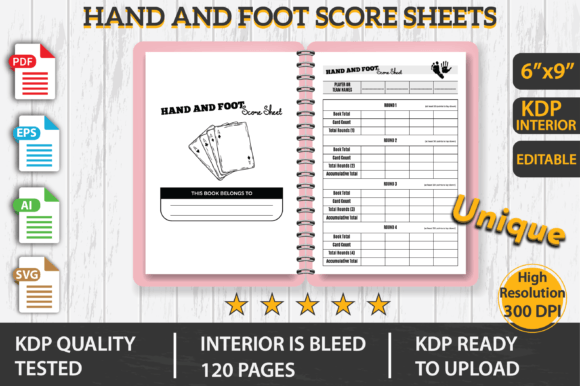
When I first opened the Hand and Foot Score Sheets KDP interior file, I immediately felt that familiar spark of possibility. This isn't just a set of pages to fill in. There's a clean, organized rhythm to the layout that makes me think of cozy game nights, family gatherings, and the kind of slow, intentional moments that handmade businesses love to celebrate. The design leans into a crisp, functional aesthetic that doesn't try too hard to be decorative, and honestly, that's a strength. It creates a mood of understated reliability, the kind of product that attracts customers who value clarity and ease of use over flashy ornamentation. For a handmade seller, this means you're holding a graphic design asset that can slot into multiple product categories without clashing with your existing brand voice.
The 6×9 inch dimensions with full bleed give this KDP interior a professional, book-like feel right out of the gate. I could instantly picture it printed and spiral-bound, sitting on a coffee table next to a deck of cards and a bowl of snacks. The 120-page count suggests a substantial, lasting product, not a flimsy throwaway. That matters when you're building a handmade business reputation. Customers who buy printable game accessories, custom planners, or personalized stationery expect something that feels intentional and complete. This Graphics asset delivers that sense of completeness without any extra work on your end.
Why This Layout Works for Card Game Lovers and Crafters
There's a specific buyer who gravitates toward handmade game night accessories. They're often the hosts, the planners, the ones who laminate family score sheets and keep them in a dedicated drawer. This Hand and Foot Score Sheets KDP design speaks directly to that person. The scoring fields are logically arranged, the typography is readable without being boring, and the overall structure leaves just enough breathing room for handwritten notes. From a printable design perspective, that balance is crucial. Too much ornamentation and the sheet becomes distracting during gameplay. Too little and it feels like a corporate form. The designer here found the sweet spot.
I tested the layout by printing a sample page on standard cardstock, and the lines remained sharp and easy to follow. For crafters who sell digital products like printable game bundles, this is exactly the kind of quality you need to deliver. Your customers won't be squinting at faded grids or confused by cramped spacing. They'll be focused on the game, which means they'll remember your shop positively and come back for more.
Turning a Score Sheet into a Handmade Product Line
Now let's talk about the real magic of this design asset: its versatility beyond the obvious. Most people will look at a score sheet and think, "Okay, I'll print this and sell it." But experienced crafters know that a clean clipart or illustration element can be repurposed in dozens of creative ways. The structured grid of this sheet, for example, could be isolated and used as a decorative background for greeting cards aimed at card game enthusiasts. The header section could become a sticker design for game night snack packaging. The individual score blocks could inspire a set of planner stickers for tracking weekly goals, turning a game accessory into a productivity tool.
I would absolutely use elements from this KDP interior to create a cohesive design bundle for craft fairs or Etsy products aimed at the growing family game night market. Imagine a physical product set: a printed score pad, a matching pen holder vinyl-decorated using a Silhouette project, and a tote bag with a "Game Night Host" design pulled from the typography style of this sheet. That's the kind of cross-product thinking that turns a single graphic design asset into a profitable handmade business collection.
Practical Cricut and Silhouette Workflow Notes
Before you rush to your cutting machine, let's walk through the technical reality of using this type of SVG design or PNG design for physical crafting. The score sheet itself is primarily a print-ready interior, but the editable source file included means you can extract individual components. If you're planning a Cricut project that involves cutting the grid lines or text elements in vinyl, test the file on scrap material first. Thin lines, especially those common in table-based layouts, can become fragile when cut at small sizes. For a t-shirt design or tumbler wrap using heat transfer vinyl, I would simplify the layout significantly. Keep only the boldest lines and maybe the title of the game. The full sheet as a cut file would be a weeding nightmare.
For sublimation design work, however, this printable design shines without modification. The 6×9 ratio translates well to mug design wraps, small tumbler wrap panels, or even a set of gift tags with a game night theme. When I do sublimation, I always check the PNG resolution at 300 DPI against the final product dimensions. A quick test print on copy paper, held against the blank, saves me from wasting coated blanks. The bleed edge on this file is a thoughtful touch that makes full-surface printing much easier, especially on items like party decorations or coasters where you want the design to extend to the edges.
Resizing and Style Matching for Shop Branding
One of the first things I do with any new graphic design asset is test how it scales. The rectangular proportions of this score sheet hold up well when resized for different products. A scaled-down version makes a charming insert for handmade packaging or a thank-you card tucked into orders. A scaled-up version, cropped to focus on just the header area, could become a striking printable wall art piece for a game room. The key is to maintain the original proportions or crop intentionally, rather than stretching the design into something unrecognizable.
In terms of font pairing, the existing typography on this sheet leans into a clean, readable style. If you're adding text for a small business branding project, I would pair it with a sans serif font that echoes the no-nonsense feel, or a handwritten font that adds a personal, crafted touch. A script font could work for emphasis on a greeting card, but I'd avoid using it for the actual scoring information, readability is non-negotiable for functional products. For product mockups, I would place the printed sheet on a wooden table with a cup of tea and a deck of cards, creating a lifestyle image that sells the experience, not just the object.
Where This Design Shines and Where to Be Cautious
This KDP interior is at its best in clean printable layouts, seasonal craft bundles focused on holiday gatherings, gift products for game lovers, and decorative accents that don't require tiny cutting. The generous 120 pages mean you can create a substantial printed product that feels premium. For print-on-demand sellers, the full-bleed design means you can upload the file and get professional-looking results without adjustments.
Where I would use extra caution is in very small cutting details, thin lines isolated for vinyl, crowded compositions if you're adding extra text, low-contrast colors if you recolor the file, layered vinyl projects that require precise registration, and small sticker sizes where the grid lines might blur together. If a customer orders a set of tiny planner stickers based on this design, I would simplify the artwork significantly before cutting. The full grid just won't translate well at half an inch wide.
Testing Before You Sell to Customers
I cannot stress this enough: test the file before you list finished products in your creative marketplace shop. Print a sample on the exact paper stock you'll use. If you're offering a laminated version, laminate one and write on it with dry-erase markers to check for smudging. If you're creating a digital product like a downloadable PDF, open it on multiple devices to make sure the formatting holds. For commercial license purposes, verify that the design assets you're using allow for the specific product type you're selling. Most KDP interiors come with clear terms, but it's always worth double-checking before you invest in bulk printing or list a new Etsy product.
I also recommend creating a product mockup with your finished item before photographing anything. A digital mockup lets you test color schemes, see how the design looks on different backgrounds, and catch any alignment issues early. I keep a folder of blank mockups for mug design, tote bag, and t-shirt design projects specifically for this pre-production stage. It saves me hours of rework and ensures my customers receive exactly what they see in the listing photos.
Building a Collection Around Game Night Décor
The real value of this Hand and Foot Score Sheets KDP asset lies in how it can anchor a broader product line. I would use it as the centerpiece of a design bundle that includes matching gift tags shaped like playing cards, sticker designs for game night snack bags, greeting cards for hosting thank-yous, and printable wall art with card game quotes. A Silhouette project could cut custom stencils for etching game-themed glasses, using the typography from this sheet as a style reference. A Cricut project could produce iron-on decals for canvas pouches that hold scorecards and pencils. The cohesion across products signals to buyers that your handmade business is thoughtful, professional, and worth their loyalty.
For craft fair sellers, this type of themed collection is a booth standout. Shoppers browsing for unique gifts are drawn to displays that tell a complete story. A game night bundle with a score pad, a decorated tumbler wrap cup, and a set of party decorations feels curated and intentional. It also increases your average order value, because customers are more likely to buy multiple items that clearly belong together. The small business branding opportunity here is substantial, especially if you carry the clean, functional style of this sheet across your packaging and signage.
Final Thoughts from a Crafter's Worktable
After working with this file, printing samples, and imagining its applications across my product catalog, I'm genuinely pleased with the Hand and Foot Score Sheets KDP as a design asset. It's not flashy, but it's incredibly useful. The editable source file means I can adapt it for specific customer requests, like changing the color scheme to match a wedding theme or adding a custom monogram for a personalized gift. The 120-page count feels generous, and the 6×9 size with bleed gives it a polished, retail-ready look. For printable product creators, DIY creators, and creative entrepreneurs serving the game night niche, this Graphic design resource is a practical, time-saving addition to your toolkit. Just remember to test your cuts, simplify where needed, and always build your product line around the real experience you're selling: connection, laughter, and a little bit of friendly competition.