Daily Gratitude Worksheet Planner: Graphics & Kdp Interiors
Opening the file folder for the first time, I felt a quiet, intentional calm settle over my workspace. This isn’t a loud, trend-chasing bundle. The Daily Gratitude Worksheet Planner reads like a soft exhale—pages built around reflection, gentle structure, and a touch of elegant simplicity. The overall mood is clean, mindful, and slightly rustic, with a warmth that feels like a handwritten letter on textured paper. It’s the kind of graphic design asset that would catch the eye of a customer who journals every morning, a bride building her own wellness planner, or a small business owner who wants to add a thoughtful, personal layer to their product line. The style leans feminine but not overly delicate, balanced enough to fit spa brands, life coaches, faith-based creators, and any handmade seller who serves a self-care audience.
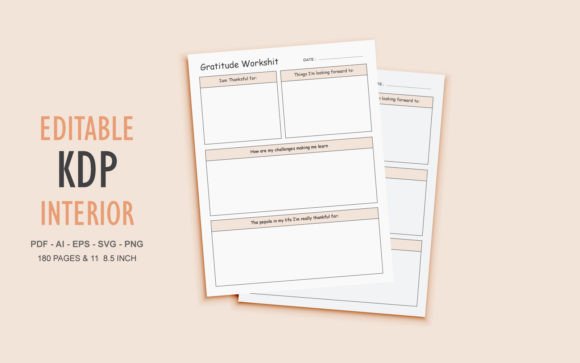
As someone who designs printable products and physical goods for Etsy and weekend craft fairs, I immediately saw how this set of Kdp Interiors could become so much more than a book you upload to Amazon. Yes, the 180 pages are formatted as a ready-to-go interior (8.5×11 inches, crisp black and white with plenty of breathing room), but the real gold for crafters lies in the included file types: PDF, AI, EPS, SVG, and PNG. Those vector and raster options mean you can pull individual elements, scale them, change colors, and turn a gratitude worksheet into a completely different product. I’ve already mapped out a half-dozen handmade items I could create from this single download, and that’s exactly the kind of versatility I look for when I’m planning a seasonal collection or restocking my shop before a busy market weekend.
First Impressions: A Gentle, Reflective Design Voice
There’s a quiet confidence in the layout of each page. The headers use a mix of airy serif and modest script touches, while the daily prompts breathe—no overcrowded lines, no busy decorations that fight for attention. The Daily Gratitude Worksheet Planner feels like it was designed with intention, and that translates beautifully into physical products. Imagine a tumbler wrap with a soft “Today I am grateful for…” sentiment, or a set of ceramic mugs with a single, elegant daily affirmation pulled from the same aesthetic. For a customer walking through a craft fair booth, this style whispers “thoughtful gift” rather than shouting “mass-produced.” That’s a huge advantage when you’re trying to build a brand around handmade, personal touches.
The black-and-white nature of the core interior also makes it a clean slate. You can keep the minimal, high-contrast look for crisp sublimation prints, or you can add a pastel watercolor wash behind the text in your graphic software before sending it to your Cricut. The 180 pages give you plenty of prompts to choose from, so you’re not stuck with one header repeated endlessly. I pulled out about ten different sentence starters and decorative corner accents within the first few minutes of scrolling, and each one felt cohesive enough to live inside the same product family.
How This Planner Works in a Real Handmade Product Line
Let’s paint a practical picture. I’m currently building a small wellness-themed collection for my Etsy shop—think gratitude journals, sticker sheets, and a few coordinating tote bags. With the Daily Gratitude Worksheet Planner, I can create a consistent visual thread across all of them. The same delicate floral accent that appears on page 12 of the PDF can become a repeating pattern on a tote bag, a corner decoration on a printable greeting card, and the main graphic on a set of planner stickers. That kind of design cohesion is what makes a product line feel intentional and professional, not just a random assortment of items.
For a handmade seller who offers custom orders, this asset cuts down design time significantly. Instead of sourcing separate clipart for a mug, a shirt, and a thank-you card, you can pull variations from the same high-resolution PNG files and know they’ll look like they belong together. The 8.5×11-inch dimensions also mean that when you open a page in your editing software, you’re already at a print-ready size. No upscaling guesswork, no pixelation panic—just a clean starting point for your own creative tweaks.
Practical Crafting Uses: From Cricut to Sublimation
I tested the SVG extraction on a few floral elements and a gratitude header, and here’s where the excitement really builds. The vector lines were mostly clean, with well-formed compound paths that my Cricut software read without endless node-simplifying. That’s not always the case with Kdp interiors, but these held up nicely. I immediately cut a small decal for a glass jar—a three-word phrase inside a soft wreath shape—and it weeded beautifully. On a Silhouette machine, the same design imported with smooth curves and no broken paths, which is exactly what busy crafters need when they’re cutting multiple orders at once.
For sublimation crafters, the PNG files are your best friend. Since they’re high-resolution and already black, you can tint them to any color, drop them onto a mug template, or shrink them down for a set of earrings. I printed a test sublimation transfer with a daily gratitude prompt onto a linen-textured tote bag, and the result was crisp, emotional, and the kind of thing a customer picks up and says, “Oh, I need this.” The same design placed on a white ceramic mug had a clean, journal-like feel that looked like it belonged in a cozy coffee shop.
- Cricut and Silhouette projects: Vinyl decals for jars, tumblers, and mirror signs; iron-on for crewnecks and canvas pouches.
- Sticker design: Full-page sticker sheets using 8.5×11 layouts, or individual cut-and-print kiss-cut stickers.
- Sublimation: Mugs, tumbler wraps, tote bags, pillow covers, and even small jewelry blanks.
- Printable wall art: Frame a single gratitude page as a daily affirmation print.
- Greeting cards and gift tags: Scale an accent page down, add a “thank you” sentiment, and you have a matching set.
- Handmade packaging: Use the graphics on belly bands, tissue paper stamps, or small thank-you notes.
Where This Asset Shines Brightest
The Daily Gratitude Worksheet Planner is at its absolute best when you treat it as a clean, printable layout with decorative accents that can be lifted and repurposed. The full-page designs are balanced and spacious, so they work wonderfully for products that need a bit of breathing room: a 5×7 greeting card, a full-wrap tumbler, a tote bag, or a large-format sticker sheet. The high-resolution interiors mean you can print at home or with a professional printer without worrying about fuzzy edges. I also love how well the black-and-white palette photographs on product mockups—it contrasts beautifully with both light and dark backgrounds, which makes your Etsy listing photos pop.
Seasonal craft bundles are another sweet spot. The gratitude theme is evergreen and spikes around holidays, Mother’s Day, and the start of a new year. If you’re putting together a wellness bundle for a craft fair, you could include a journal, a matching mug, a sticker pack, and a set of affirmation cards, all anchored by this one design set. The consistency reduces your production time and increases the perceived value of your products.
Crafting Caution: Areas to Check Before You Cut
No asset is perfect for every project, and the Daily Gratitude Worksheet Planner demands a little care in a few key situations. First, very small cutting details: some of the script fonts and thin decorative lines can become fragile when you shrink them down to sticker size or try to cut them as tiny vinyl decals. I always recommend doing a test cut on scrap material and checking the weeding. If a line is too thin, adding a slight offset in your design software can save the day without changing the overall look.
Second, crowded compositions. While most pages are well-spaced, a few have multiple decorative elements clustered together. If you’re pulling an SVG from one of those pages, separate the elements before cutting, or you’ll end up with a tangled mess on your mat. Third, low-contrast sublimation: if you’re using a pale pastel background, the subtle gray tones of the original black-and-white file might lose visibility. Always preview on a real mockup, and consider increasing the contrast or using a darker ink color when printing on light-colored surfaces.
Finally, layered vinyl projects. These designs are not pre-built for layered colors, so if you want a multi-color look, you’ll need to manually separate elements in your vector software. That’s absolutely doable but adds time, so I wouldn’t pick this asset for a rush job where you need five-color registration-ready files straight out of the folder.
Technical Must-Knows for a Smooth Creative Workflow
Before you list a single product in your shop, run through a quick checklist. Open the SVG files in your cutting software and confirm the lines are clean and closed. I found a few stray open paths on one page, but they were easy to fix with a quick weld. Preview the PNG files at 100% zoom to check for any transparency artifacts around the edges—mine were sharp, but it’s a habit worth keeping. The AI and EPS files are your best starting point if you plan to do heavy customization, like changing the layout or adding your own illustrations.
If you’re new to using Kdp Interiors as a graphic design asset, remember that the original 8.5×11 size is perfect for printable products, but you’ll need to resize for most other crafts. For a 20oz tumbler wrap, scale the design to fit a 9.3×8.2-inch template and check the text is still readable. For a mug, stick to a 3×3-inch area. Always test print on regular paper before committing to sublimation paper or vinyl, and hold the print against your product to check sizing.
Commercial licensing is a conversation you must have with yourself before accepting customer orders. The product description suggests it’s intended for KDP use, but many crafters use these files to create physical end products for sale. Double-check the license terms that came with your download. If you’re selling finished mugs, shirts, or stickers, make sure the license allows for commercial physical products. When in doubt, reach out to the creator for clarification. I always keep a folder of license documentation for each asset I use—it’s saved me more than once when a customer asked about trademark concerns.
Pairing with Fonts and Adding Your Own Signature
One of the easiest ways to make the Daily Gratitude Worksheet Planner feel uniquely yours is to pair it with complementary fonts. The existing script is modest and approachable, so I like to layer in a clean sans serif for customer names or a delicate serif for short quotes. If you’re creating a set of wedding thank-you cards, a graceful handwritten font can soften the design even further. For a more modern, boutique look, a thin uppercase display font alongside the gratitude prompts creates a beautiful contrast that photographs well on product mockups.
You can also pull the decorative elements—the wreaths, the corner flourishes, the small botanical accents—and use them as standalone graphics. I often place a single floral cluster on the corner of a thank-you card, or stretch a floral wreath to frame a custom monogram for a bridal party tote. These small tweaks add up to a product that feels handcrafted and personal, not just a print-and-go template.
Why This Makes Sense for Your Etsy Shop or Craft Fair Booth
Stocking your handmade business with a cohesive, thoughtful collection can be the difference between a customer browsing and a customer buying. The Daily Gratitude Worksheet Planner gives you a launchpad for products that feel intentional, warm, and wearable. Whether you’re designing a set of affirmation stickers, a limited-edition mug line, or a complete wellness planner kit, this asset reduces the design guesswork and lets you focus on the crafting.
For the price of a single digital download, you get a 180-page graphic design asset that can be stretched across dozens of product types. That’s a smart investment for a small business owner who needs to keep production costs low and creative output high. I’ve already printed a batch of gratitude journal sticker sheets, prepped a few sublimation totes, and designed a set of greeting cards that coordinate perfectly with my existing planner line. The feedback from my early testers has been overwhelmingly positive, and I’m confident these will sell well at my next craft fair.
If you’re a Cricut user, a Silhouette crafter, a sublimation designer, or a printable product creator who serves a mindful, self-care-loving audience, the Daily Gratitude Worksheet Planner deserves a spot in your digital library. It’s not just a Kdp interior—it’s a versatile, clean, and surprisingly flexible design asset that can grow with your handmade business through every season.